In a landscape dominated by wood-framed houses erected at breakneck speed (that in some cases comprised on quality) to bolster builders’ profits, ICF homes emerge as beacons of reliability and sustainability.
From their robust construction to their ability to weather even the most extreme conditions, these concrete-based dwellings defy conventional home building. The story of ICF homes speaks volumes about prioritising quality over quantity and setting new standards for residential construction.
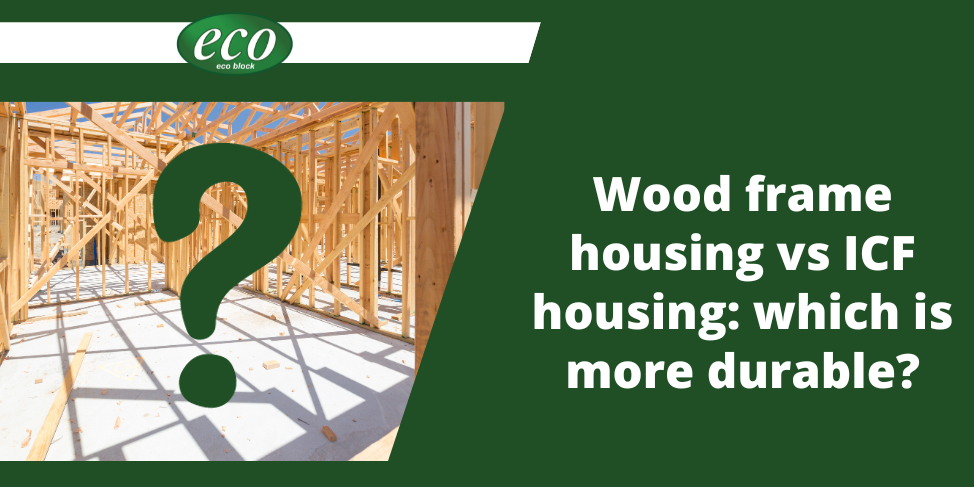
Discover why ICF housing outperforms wood-frame housing in terms of durability for your new home construction.
Durable building materials: wood frame housing vs ICF housing
As a result of the rapid construction and cost-cutting measures, many wood-framed homes in Australia are often susceptible to structural issues and therefore lack the necessary durability to withstand extreme weather conditions.
These homes may also pose a higher risk of fire damage due to their wooden construction, further compromising the safety of residents.
In contrast, Insulated Concrete Form (ICF) construction offers a more robust alternative with superior strength and resilience.
By using ICF for residential construction, homeowners can benefit from increased energy efficiency, reduced maintenance costs, and optimal protection against natural disasters.
Historical buildings from ancient Rome or the medieval era illustrate that structures built with concrete or stone endure over time. By opting for ICF construction with added insulation for comfort throughout the seasons, you’re choosing a similarly enduring approach for your home.
Embracing this resilient building method could enhance Australian homes’ longevity and contribute to sustainable development by promoting eco-friendly and durable housing solutions.
Durable building material: why are ICF homes more long-lasting?
ICF homes, constructed from polystyrene (EPS) foam and concrete, are resistant to deterioration over time due to the absence of organic materials. This is crucial because factors like moisture can accelerate wood decay in traditional houses.
Unlike wood-framed structures, ICF homes are not susceptible to issues such as moisture and condensation. Concrete and polystyrene can endure prolonged exposure to water without degrading, as demonstrated by docks made from Expanded Polystyrene (EPS), the same material used in ICF blocks.
When deciding between Insulated Concrete Forms (ICF) and traditional wood for your next construction project, it’s essential to consider the longevity of your investment.
If you want a durable, low-maintenance property that will retain its value for generations, ICF construction is the ideal choice.
Durable building material: build a long-lasting home with ICF’s
Are you debating between wood frame and ICF housing for your new home construction? ICF housing clearly outshines wood-framed housing in terms of durability.
ICF is the way to go if you want a long-lasting home with super strength and resistance that is not susceptible to mould, moisture, and condensation.
Ready to start building a house that will last the test of time? Contact Ecoblock today!